
San Mateo County October 2026 Market Report
October 2026 San Mateo County Housing Market Report: Mortgage Rates Jumped 70 Basis Points and the Market Got More Competitive Anyway
Data through September 2026
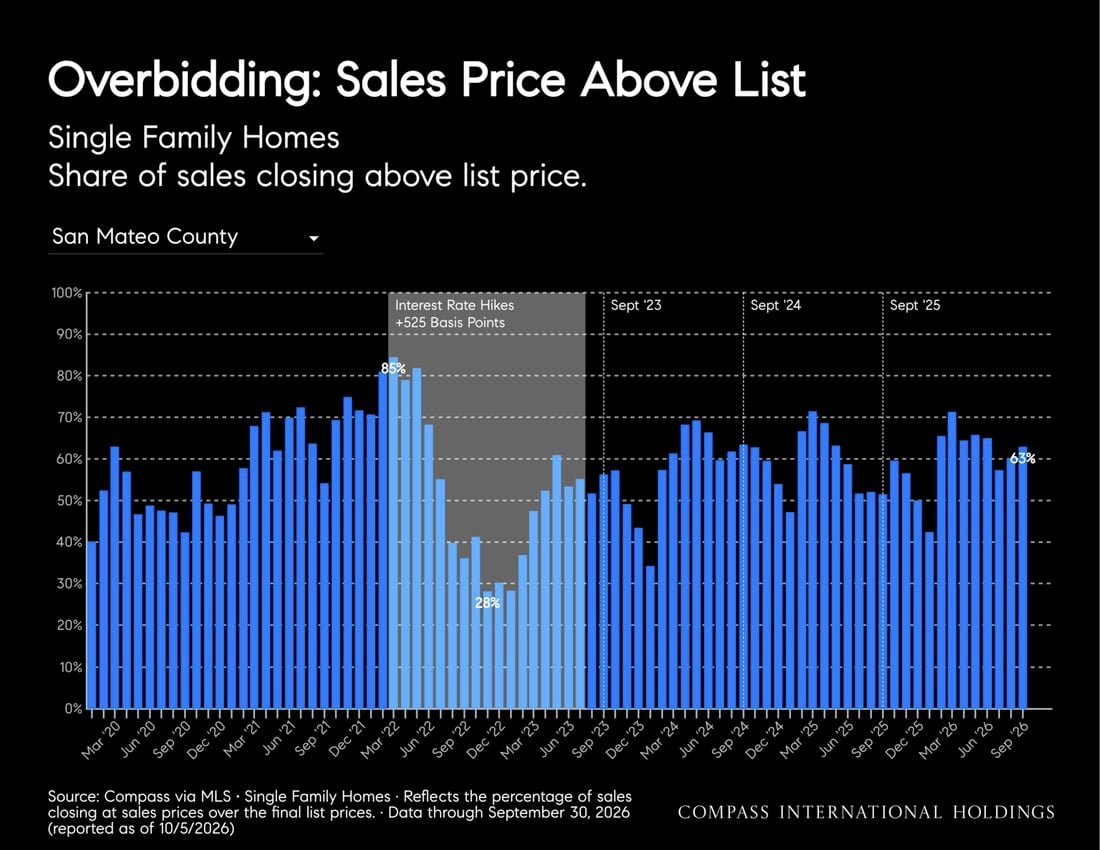
September delivered the sharpest rate move of the year. Mortgage rates climbed another 70 basis points to 7.56%, their highest level in several years, as the 10-year Treasury yield reached a 25-year high. National mortgage applications fell. And San Mateo County, where the median home costs more than $2 million and most buyers need financing, responded by getting more competitive, not less. The median rose 9% year over year to $2,175,000, overbidding jumped 12 points to 63%, and homes sold in 24 days instead of 29. Here is what the data shows and why those two things are not as contradictory as they look.
The Macro Backdrop
Rates are the headline. After spending four years trading between roughly 6.25% and 7.25%, the 30-year fixed broke out of that band in September, rising 70 basis points in a single month to 7.56%. The driver is the 10-year Treasury, now at 5.24% and at its highest level in 25 years, pushed there by government spending, international conflict, and persistent inflation fears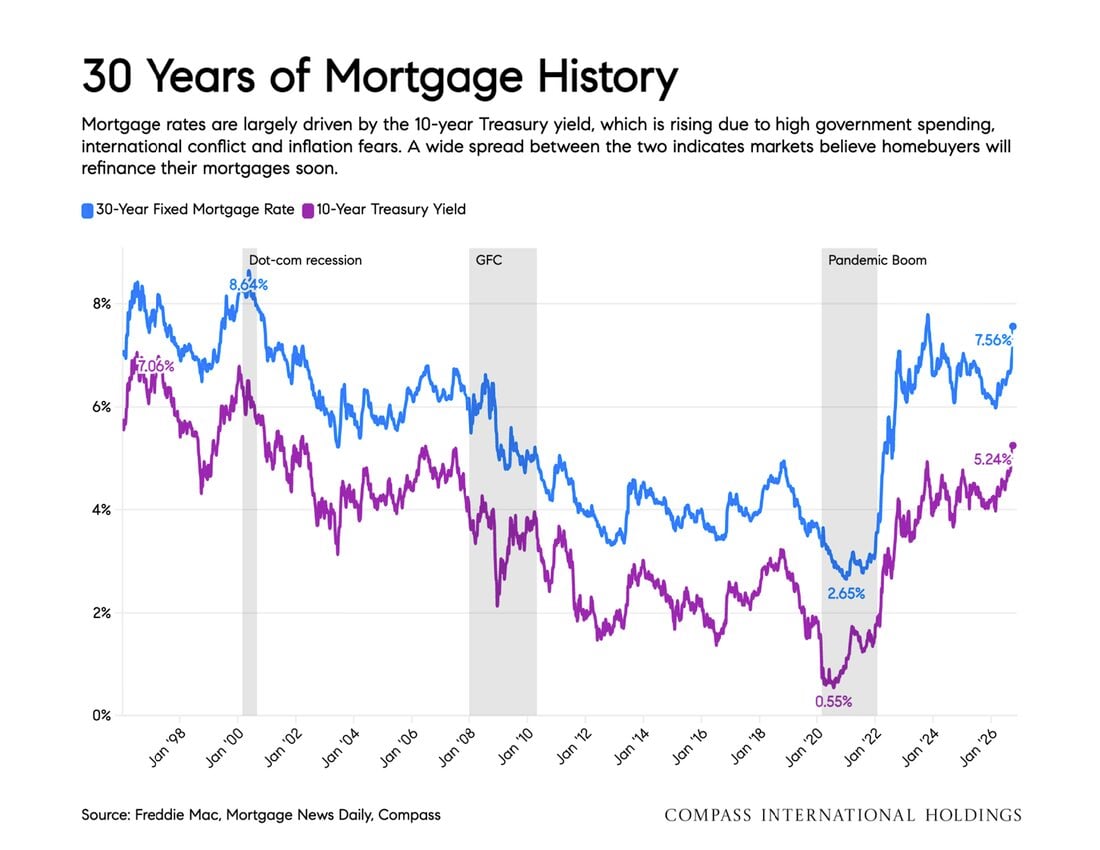
Inflation is the reason the Treasury will not settle. CPI and PCE both moved higher again in July and August, landing around 3.4%, well above the Fed's 2% target. That reverses the modest cooling of early summer. Until the inflation data changes meaningfully, there is no path to cheaper mortgages.
The labor data is mixed in a way that does not help borrowers. National payrolls came in lighter than expected in September, averaging about 68,000 new jobs per month for 2026. But the Bay Area actually improved: total San Francisco metro payrolls rose this summer after four consecutive months of decline, and the region is now up about 3,900 jobs on the year. A strengthening economy supports housing demand, but it also keeps upward pressure on rates.
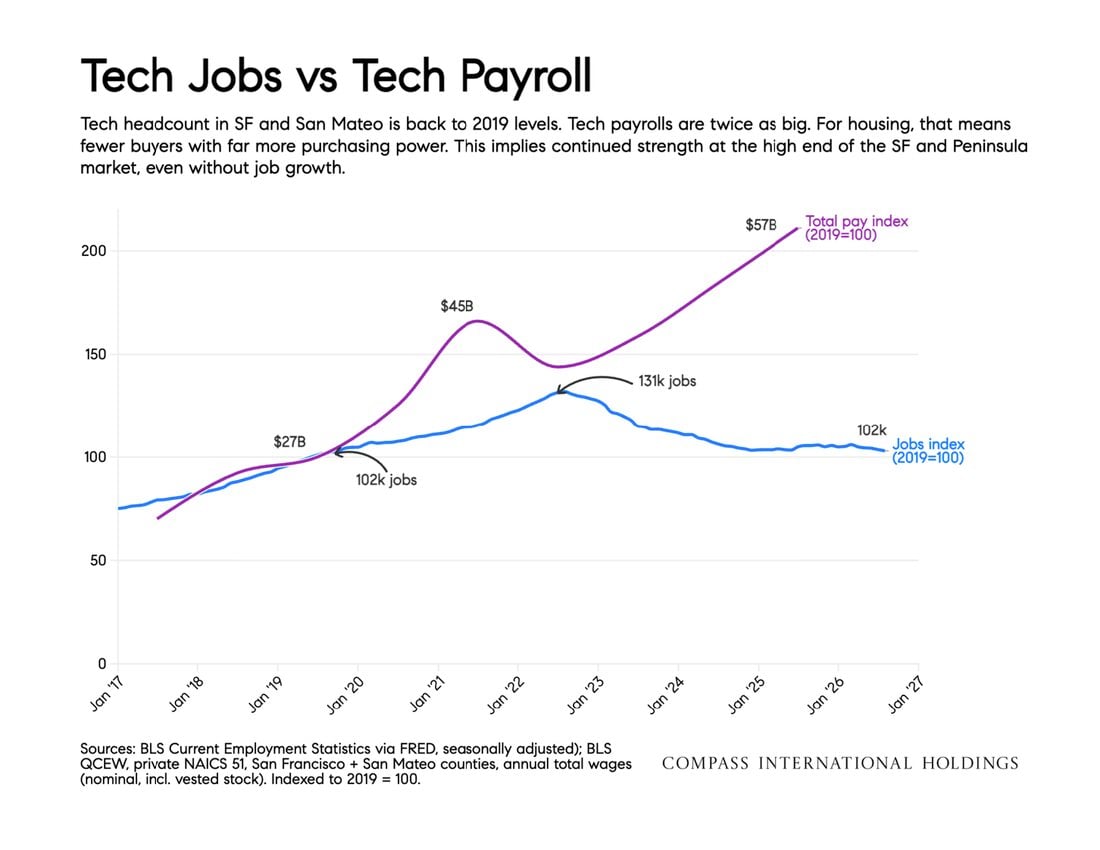
Here is the chart that explains San Mateo County better than any other in this month's report. Tech headcount across San Francisco and San Mateo is back to roughly 102,000, the same level as 2019. Tech payrolls over that same period went from $27 billion to $57 billion. Fewer tech workers, more than twice the total compensation.
San Mateo County: Where Things Stand
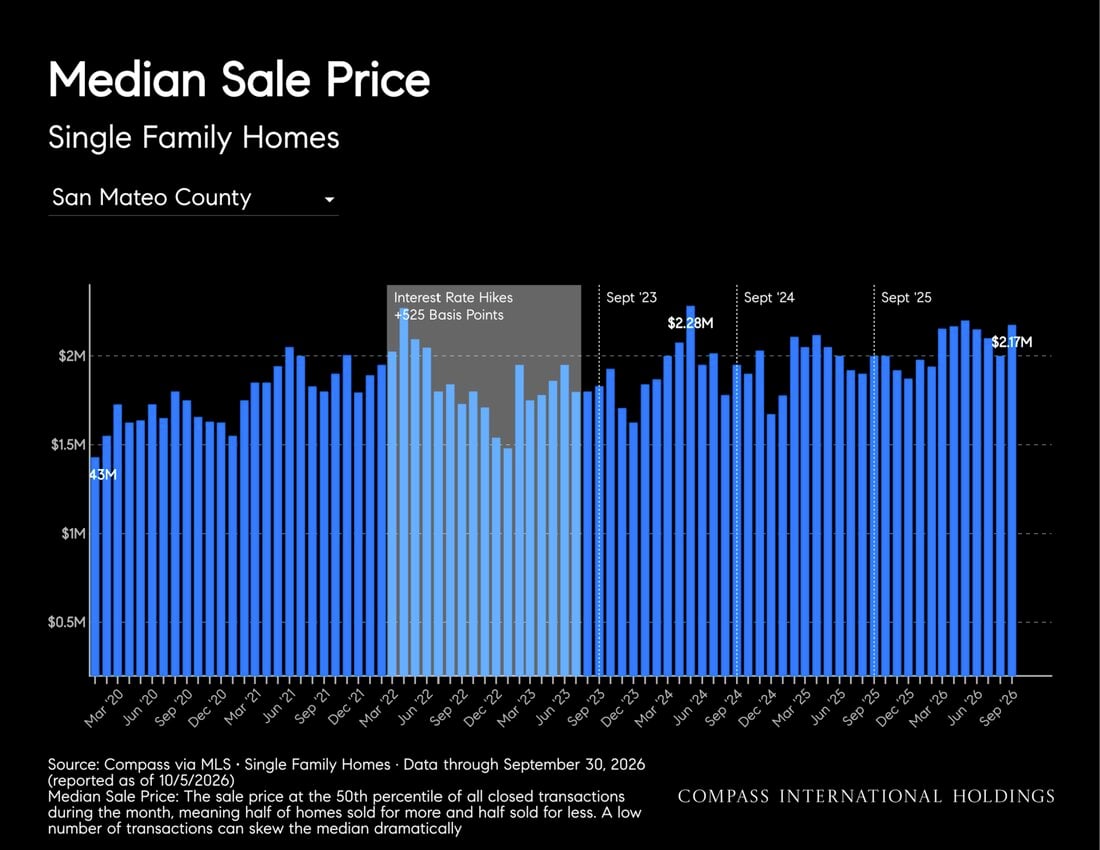
The median single-family sale price finished September at $2,175,000, up 9% from a year ago and up from $2.05 million in August. That puts the county back near the top of its 2026 range after the late-summer dip.
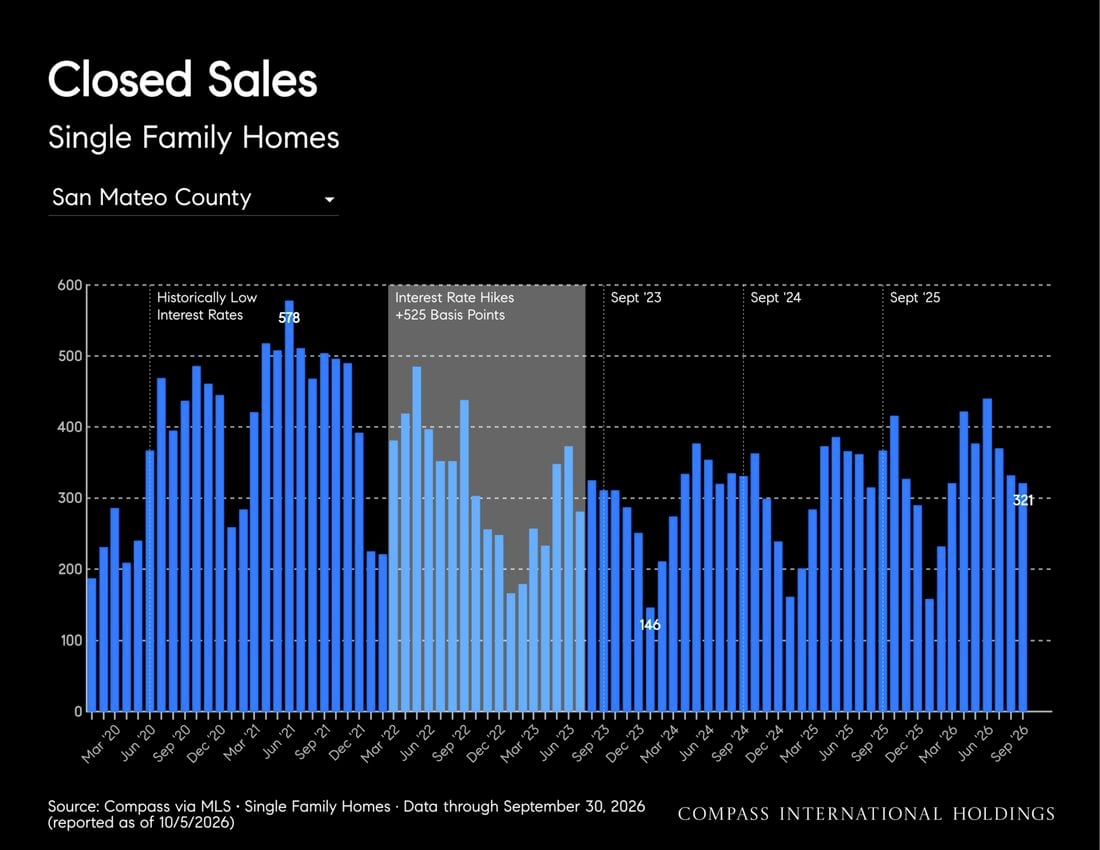
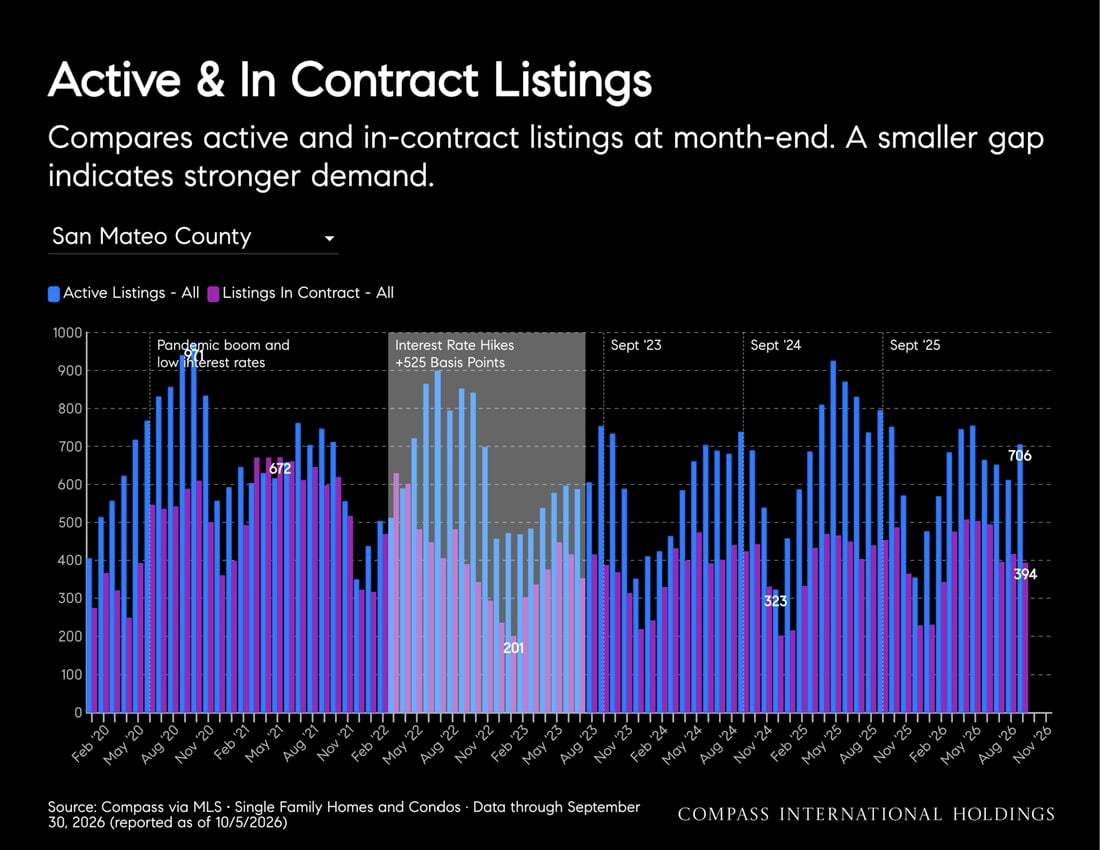
Sales volume continued to fall. Roughly 320 single-family homes closed in September, down 12% year over year and down modestly from August. Condo closings fell 7% year over year to 70. The read on that decline matters: with active single-family listings down 16% year over year to 473 and homes selling in 24 days with 63% going over asking, the shortfall in closings reflects a shortage of homes to buy rather than buyers stepping back.
Inventory tightened on the year even as the fall listing season arrived. Active single-family listings fell 16% year over year to 473, and new listings were down 11% from last September. Month over month the picture is seasonal and normal: new listings rose 17% and active listings rose 12% from August as fall inventory came online. Condo actives were essentially flat at 233, down 1%. Months of supply on the single-family side sat at roughly 2.
Bottom Line
The simple version of September is that affordability got worse and competition got stronger at the same time. That is only a contradiction if you assume the marginal San Mateo County buyer is rate-sensitive. The tech payroll data says otherwise: the same number of workers as 2019 earning more than double the total compensation, much of it in equity, buying from a pool of homes that is 16% smaller than a year ago.
For sellers, the operating conditions are genuinely strong. Nearly two-thirds of homes are closing above asking, the typical sale is 5% over list, and buyers are moving in under four weeks. The thing to watch is that fall inventory did arrive in September, so the scarcity advantage is modestly less extreme than it was in August. Price to the current comparables, not to the spring.
For buyers, a 7.56% rate changes the math considerably, and it is worth running your actual payment before assuming last quarter's budget still holds. The negotiating opportunity is in the condo market, where the median is down 2% year over year and 42% more new listings arrived last month. That is the one segment of this county where supply is moving in your favor.
Two things to watch into the fall. First, whether the single-family market absorbs the seasonal inventory increase or whether the 70 basis point rate move finally shows up in the demand numbers with a lag. Second, whether condo strength survives the surge in new listings. The broader question remains the same one: this county's price performance now rests heavily on a narrow, highly compensated buyer base whose purchasing power is tied to equity markets.