
San Mateo County November 2026 Market Report
November 2026 San Mateo County Housing Market Report: Record October Prices, Falling Rates, and a Tech Correction That Changes the Outlook
Data through October 2026
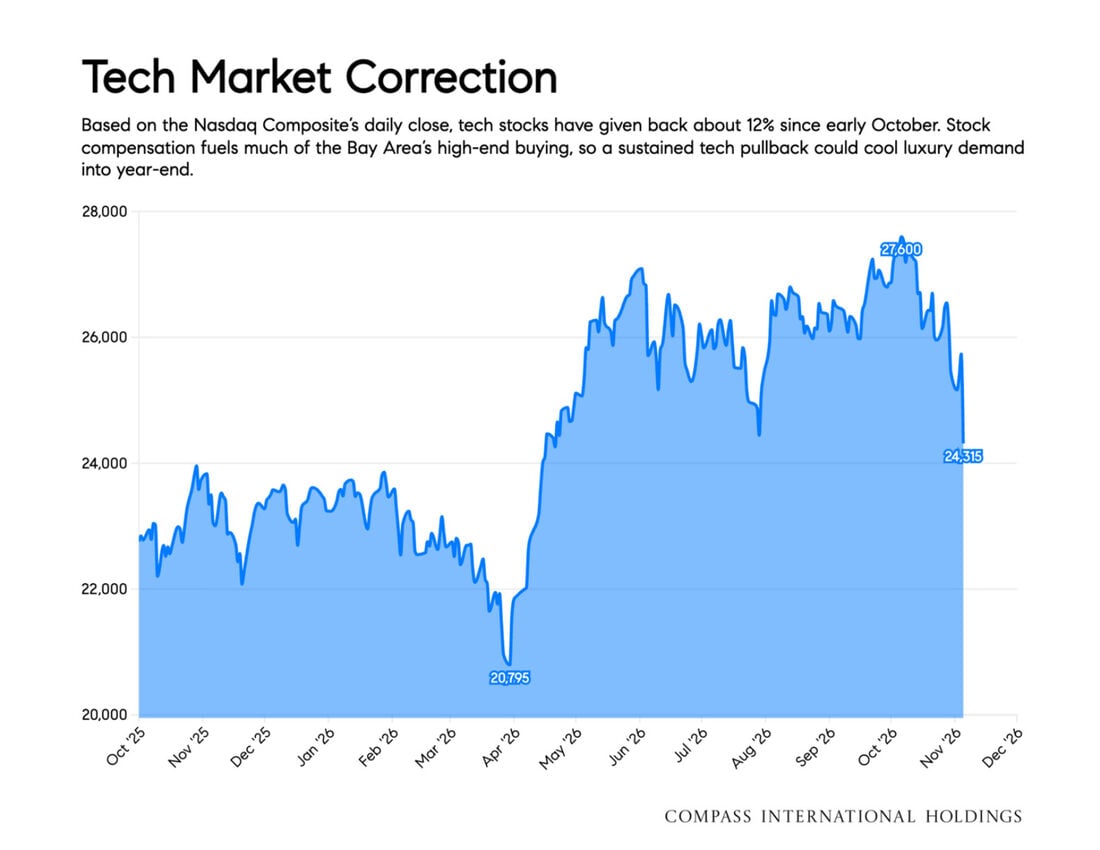
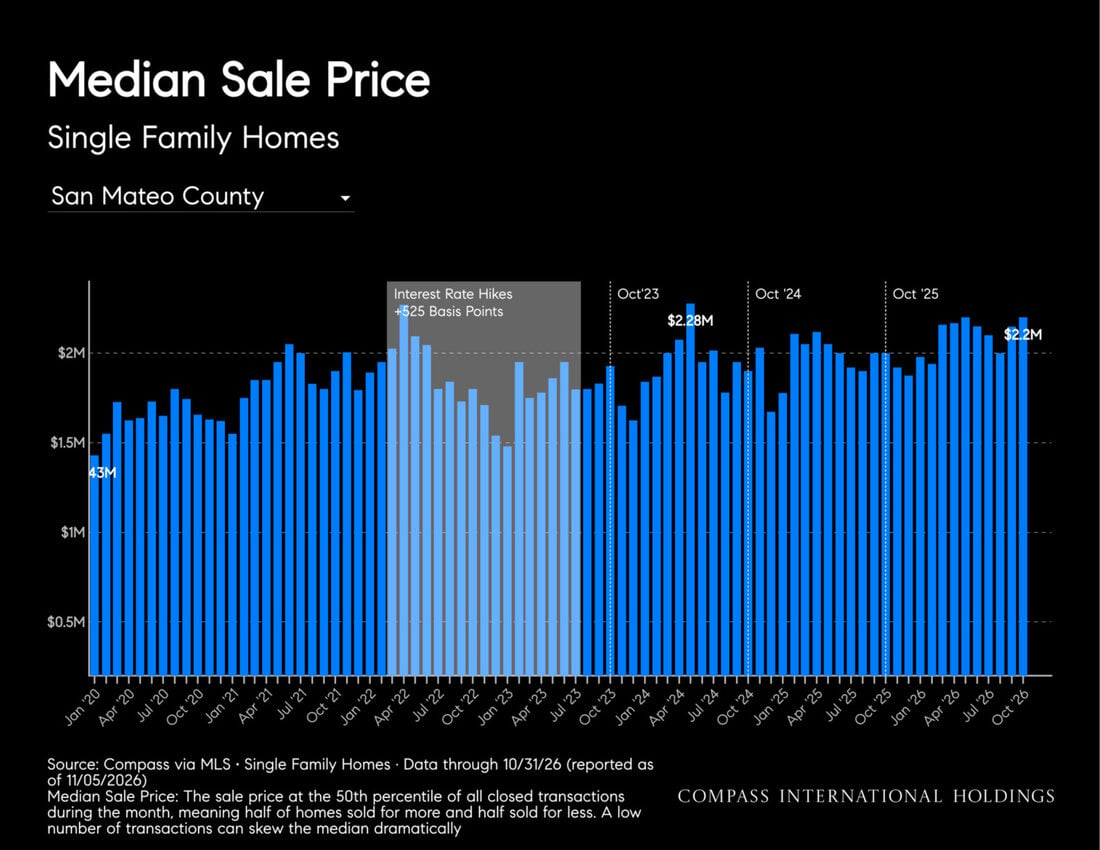
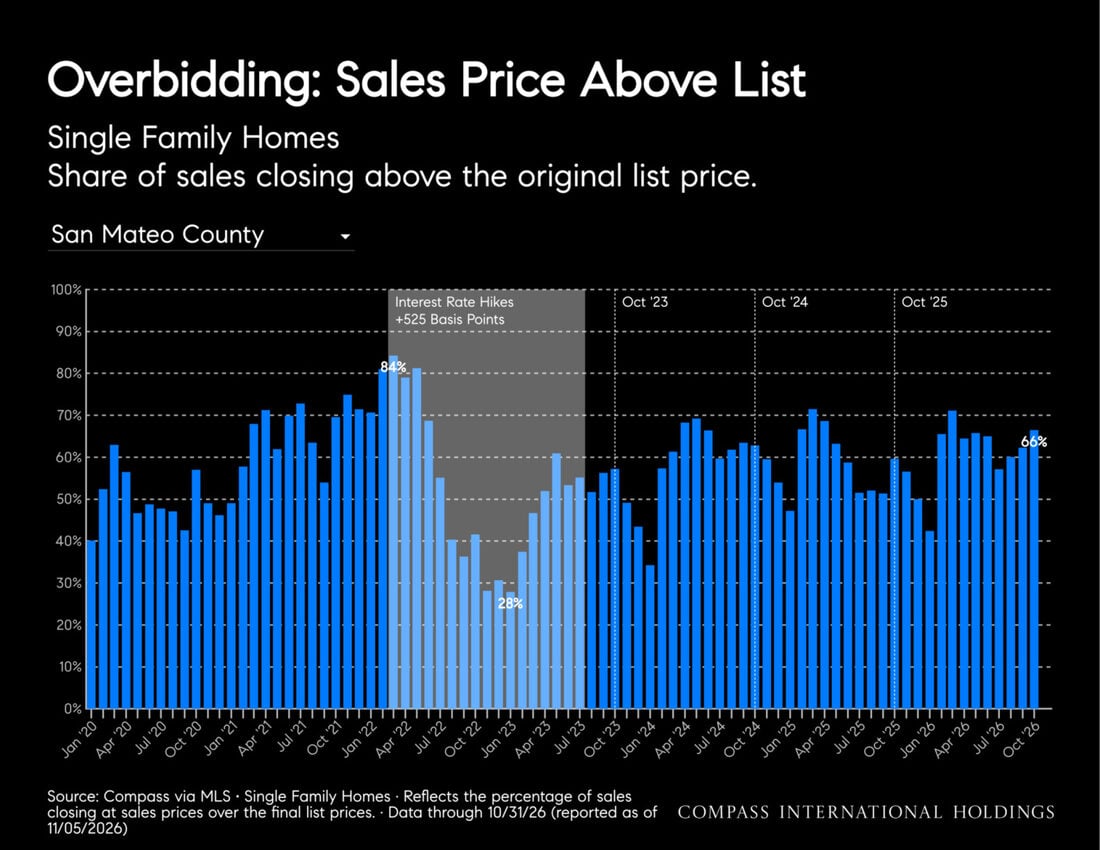
October was a strong month by every local measure. The median single-family home sold for $2,200,000, up 10% year over year and the highest October median in at least six years. 66% of homes closed above asking. Homes sold in 21 days instead of 27. And after September's spike, mortgage rates pulled back from 7.56% to 7.17%, with the 10-year Treasury falling sharply after the midterm elections. But the single most important chart in this month's report is not a housing chart at all: tech stocks have given back about 12% since early October, and that is the engine that has been driving this market all year. Here is what the data shows.
The Macro Backdrop
Rates improved. After surging to a 25-year high in September, the 10-year Treasury yield receded through October and then moved sharply lower in the days following the midterm elections, falling from 5.32% to 4.85%. Mortgage rates followed, backing off the September peak of 7.56% to 7.17%.
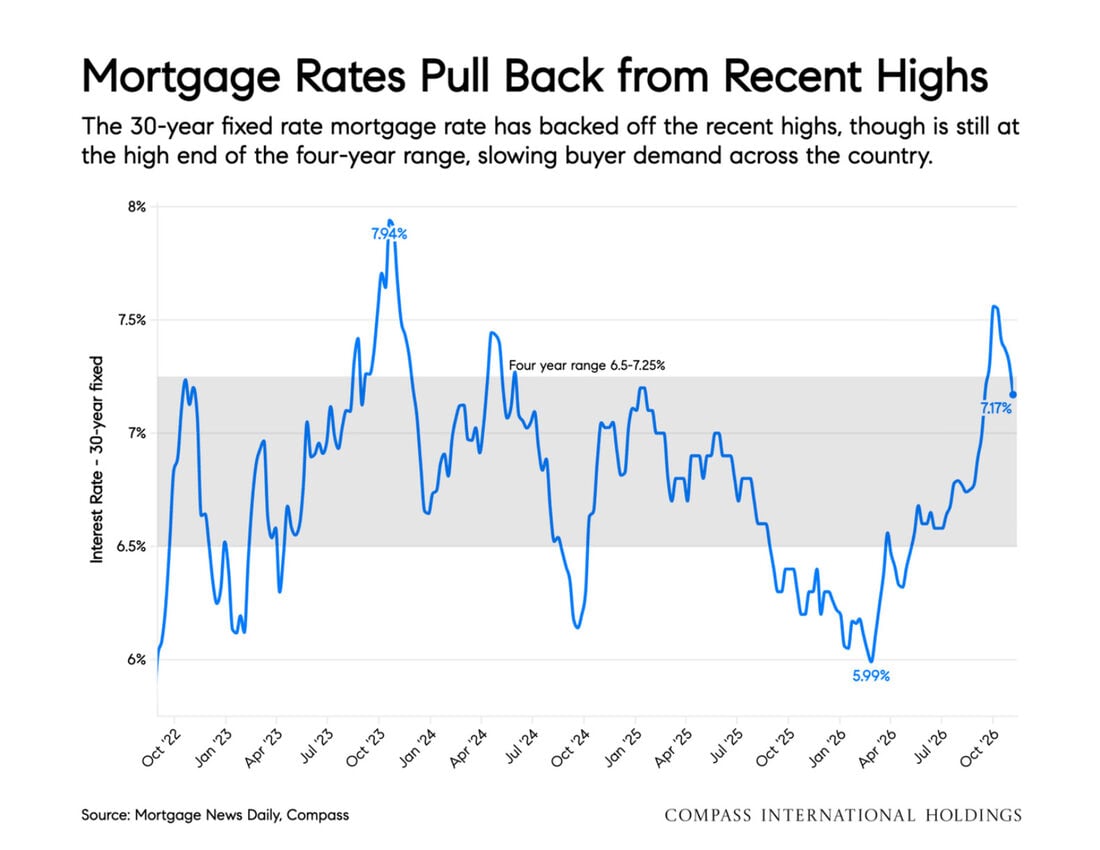
That is real relief, and it is also worth keeping in proportion. At 7.17% the 30-year fixed is still at the high end of the four-year range of roughly 6.5% to 7.25%, and national buyer demand is still being slowed by it. The forward picture is not obviously friendly either: the Federal Reserve held rates steady in October after a September hike, bond markets put a December increase at moderately likely, and market-implied expectations point toward further increases into 2027.
Inflation is why. CPI and PCE have both moved higher again in recent months to around 3.7%, well above the Fed's 2% target. Volatile energy markets and government spending keep the pressure on.
The labor data improved meaningfully. Employers added 165,000 jobs nationally in October, with recent months revised higher, bringing 2026 to about 861,000 new jobs. Bay Area payrolls have stabilized after several years of sharp declines. A stronger economy supports housing demand, though it also argues for rates staying elevated.
And then there is this. The Nasdaq Composite has given back about 12% since early October, falling from roughly 27,600 to 24,315.
San Mateo County: Where Things Stand
The median single-family sale price finished October at $2,200,000, up 10% year over year and up 2% from September. That is the highest October median in at least six years, and the 2026 line has stayed above 2025 all year.
The report attributes that decline to limited supply, and that has been the right read for most of this year. It fits less well this month. Active single-family listings were down only 4% year over year, to 515. In the months when closings were falling earlier this year, inventory was down 16% to 29%, which genuinely did constrain what could trade. An 18% drop in closings against a 4% drop in available homes is a wider gap than supply alone explains, and it is worth watching rather than waving through.
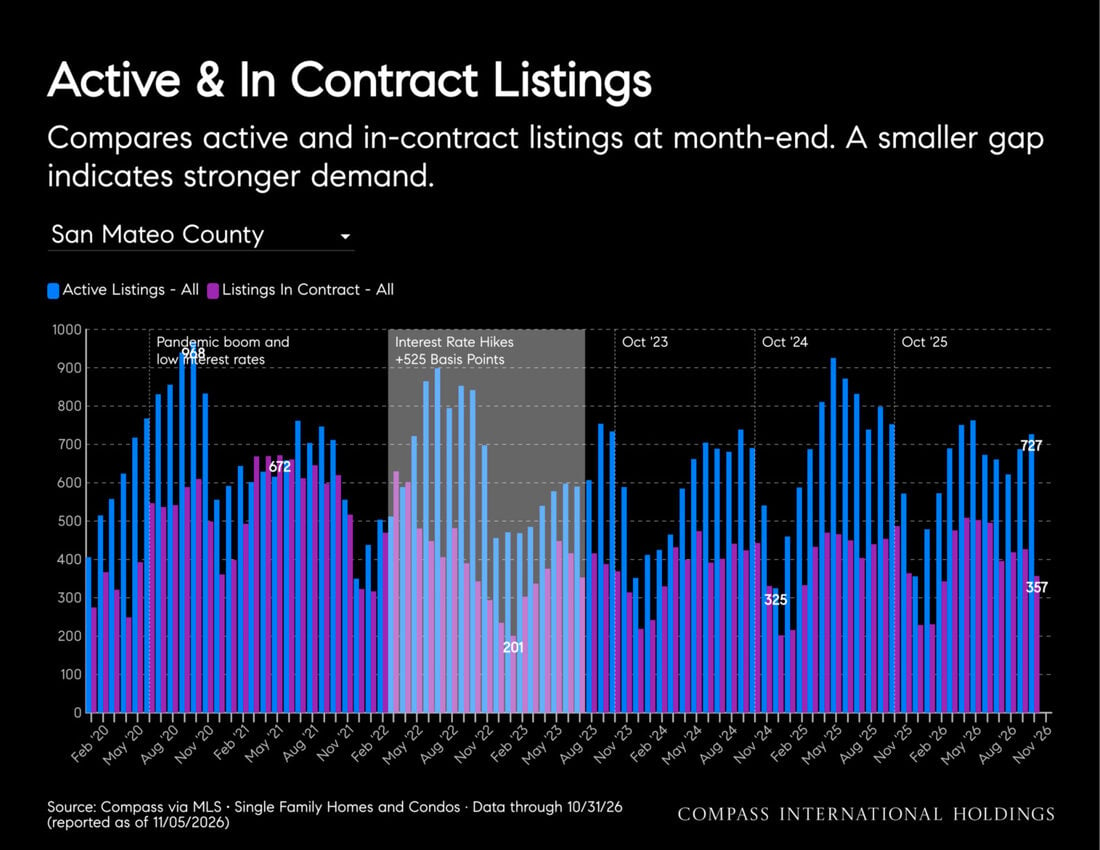
Everything else points the other way. Months of supply sat at 1.5. New listings were down 6% year over year to 425, while active listings rose 10% from September as fall inventory arrived. Average days on market fell to 21 from 27 a year ago and dropped 16% from September. Price reductions fell 17% year over year, though the reduction rate was still 25%, meaning a quarter of listings cut price at some point.
Competition held up. 66% of single-family sales closed above list price, up 7 points from last October and near the top of the range this county has run in since 2024.
Condos firmed. The condo median rose 5% year over year and 11% from September to $820,000. Condo overbidding rose 12 points to 35%, and condo days on market fell from 127 a year ago to 38, which is a dramatic improvement in liquidity. Condo active listings were down 3% to 212. The caveat is pricing discipline: 41% of condo listings took a price cut, up 4 points, so sellers are still frequently starting too high even as the segment improves.
Bottom Line
On the October data alone, this is a strong, supply-constrained market with rising prices, faster sales, and two-thirds of homes selling over asking. Rates came down from their September peak. Jobs data improved. If the report stopped at October 31, the read would be straightforward.
It should not stop there. The tech correction landed after the close of this data, and tech equity is the mechanism that has explained this county's strength all year. That does not make October's numbers wrong, and it does not mean prices are about to fall. It means the next two reports will be more informative than usual, and that anyone making a decision on the basis of October's strength should know that the input driving it has changed since.
For sellers, the conditions you are listing into are genuinely good, and there is a reasonable argument for not waiting. Inventory is still tight, buyers are still competing, and if the tech pullback persists it will reach the high end of this market before it reaches the middle. If you are selling above roughly $3 million, that timing consideration is more pressing than it is at the county median.
For buyers, rates improved about 40 basis points from the September high, which is worth rerunning your numbers for. Beyond that, the single-family market gives you very little leverage at 1.5 months of supply and 66% of homes going over asking. The condo market remains the better ground: 41% of listings there are taking price cuts, which tells you there is room to negotiate even in a segment that is improving.
Two things to watch into year end. First, whether the Nasdaq drawdown continues and whether it shows up in Peninsula luxury transactions, which is where it would surface first. Second, whether the gap between falling closings and barely falling inventory widens, because that is the earliest signal that demand rather than supply is doing the work.