
July 2026 San Mateo County Housing Market Report: Steady Appreciation, Surging Sales Volume, and a Tale of Two Bay Areas
Data through June 2026
While San Francisco grabs the AI-boom headlines, San Mateo County is quietly posting its own strong numbers - and arguably doing it in a more durable way. The June data shows a market where prices are rising steadily, sales volume is surging, and sellers still hold a clear edge, but where ordinary buyers can still compete. Here is what the data shows.
The Macro Backdrop
The national context remains unchanged from last month. Mortgage rates have stayed in the mid-6s, hovering near 6.5% as persistent inflation prevents any meaningful rate relief.
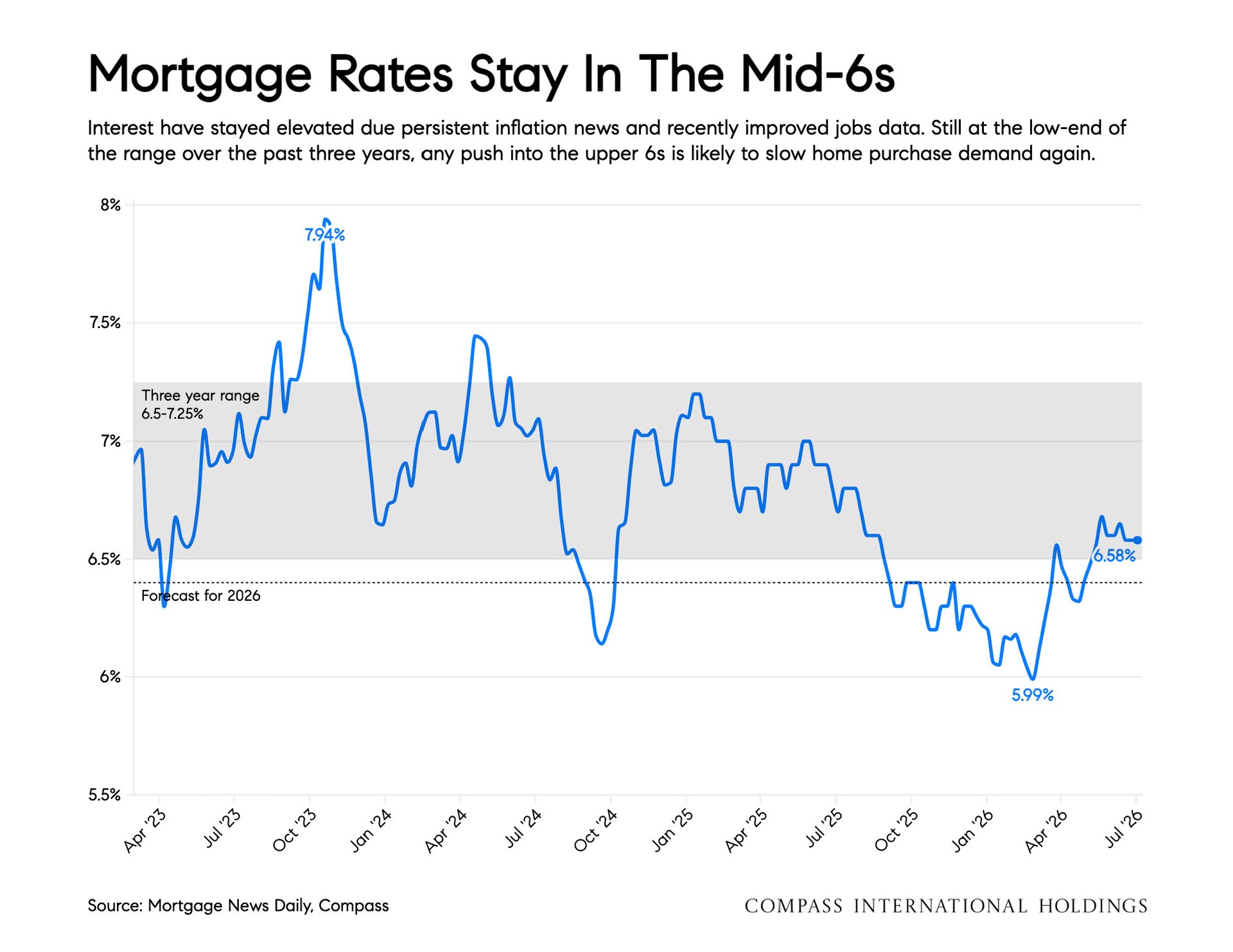
Inflation is the main culprit. CPI printed at 4.2% in June - well above the Fed's 2% target - driven by tariffs, energy costs, and government spending. That keeps the Fed on hold and keeps borrowing costs elevated for the majority of buyers who rely on a mortgage.
Nationally, hiring averaged about 92,000 new jobs per month so far in 2026 - steady but slowing. Bay Area job growth has decelerated more sharply, averaging roughly 750 new jobs per month over the past year, with the two most recent months showing renewed weakness. Bay Area tech companies have cut 58,000 jobs so far in 2026, and the impact is concentrated in Santa Clara County, where inventory is rising and prices are trailing last year. San Mateo County, sitting between the AI-boom epicenter of San Francisco and the cooling South Bay, continues to benefit from proximity to both without suffering the excesses of either.
San Mateo County: Where Things Stand
Price appreciation in San Mateo County continues to outpace most of the country, even as the pace is more measured than what San Francisco is seeing.
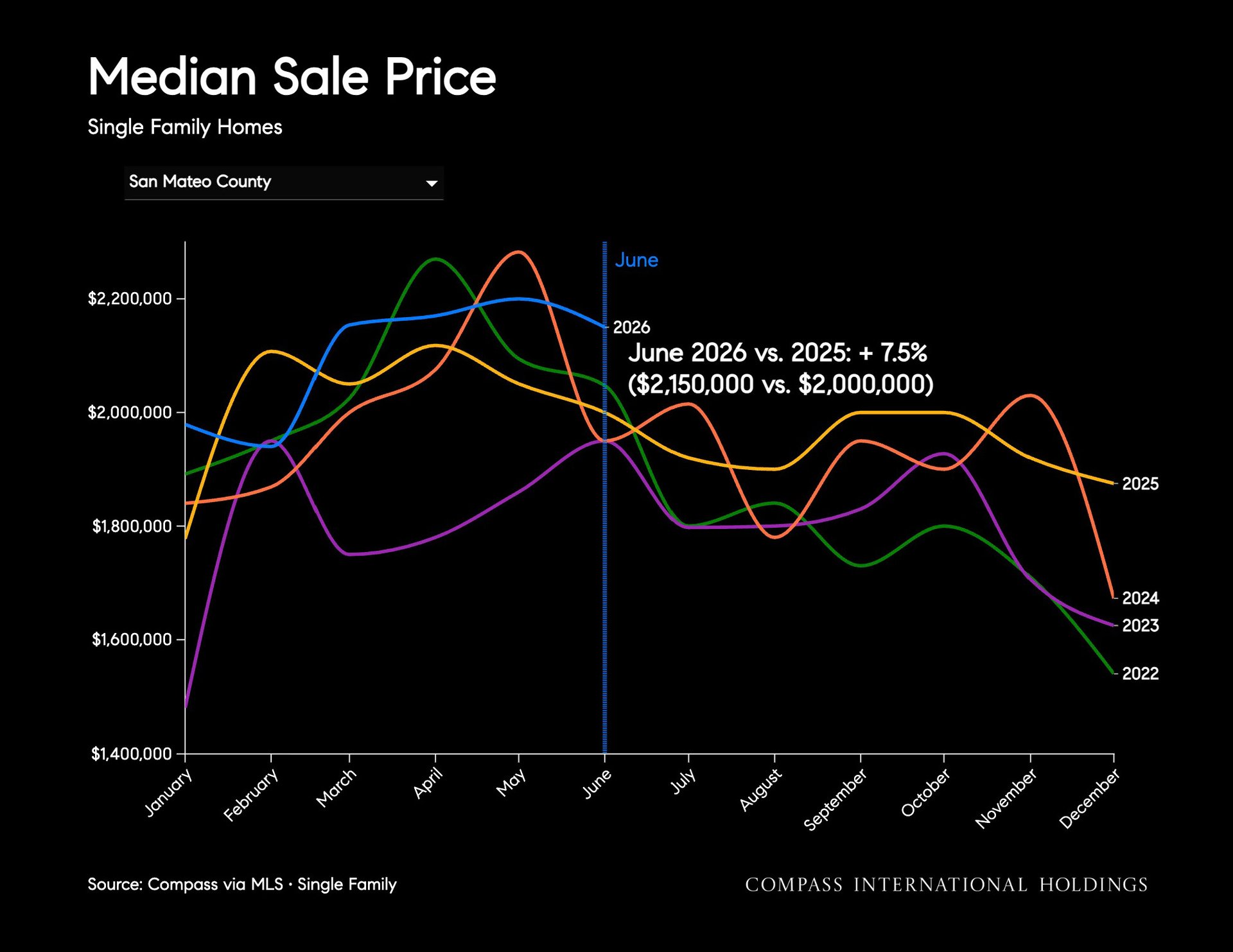
The median sale price for a single-family home reached $2,150,000 in June, up 7.5% from $2,000,000 in June 2025. That is a meaningful gain built on real demand, not trophy-sale distortions.
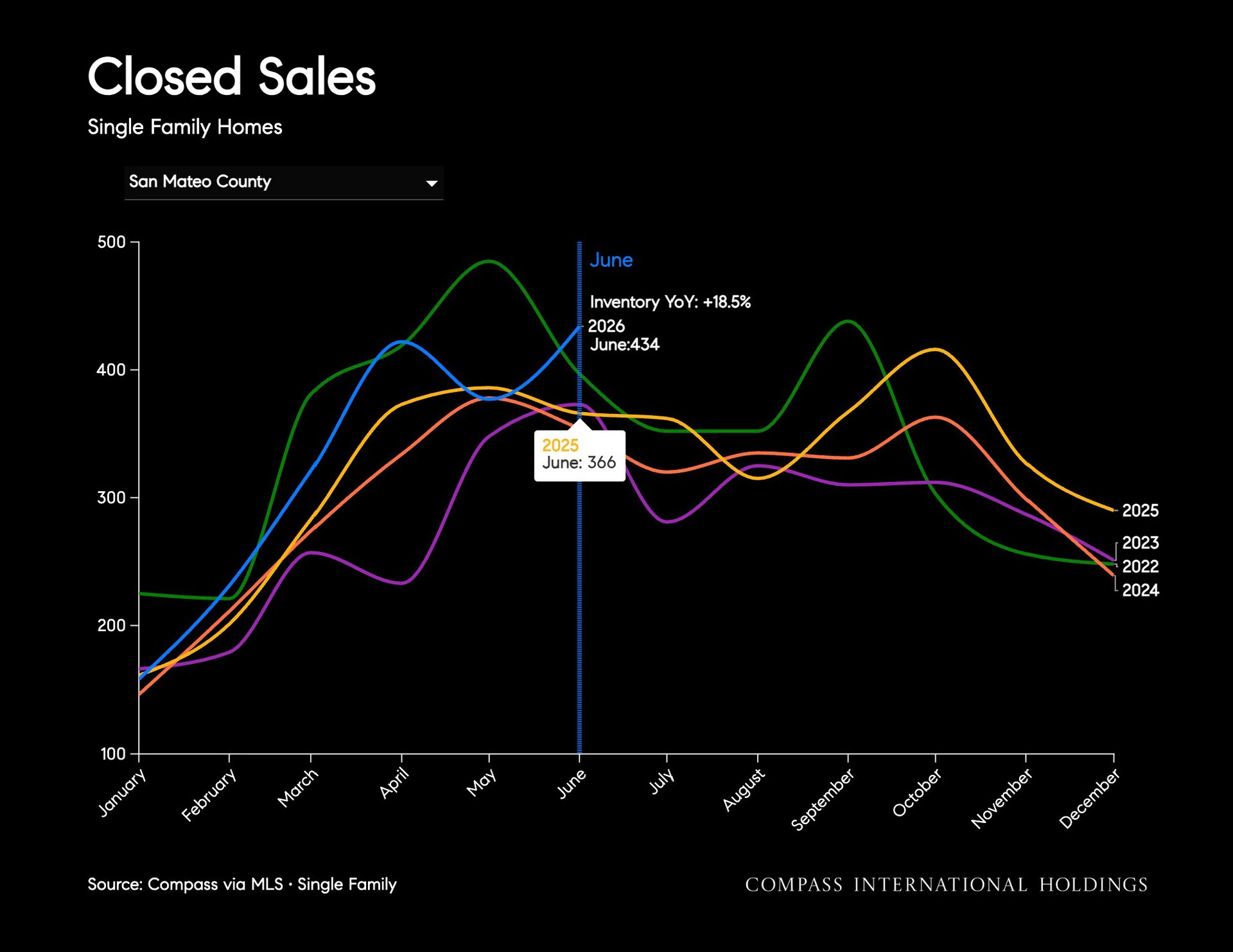
The volume story is even stronger. 434 single-family homes closed in June, up 18.6% from 366 in June 2025 - one of the largest year-over-year sales volume jumps the county has seen in recent cycles. That combination of higher prices and higher volume is a sign of genuine demand expansion, not just a supply squeeze.
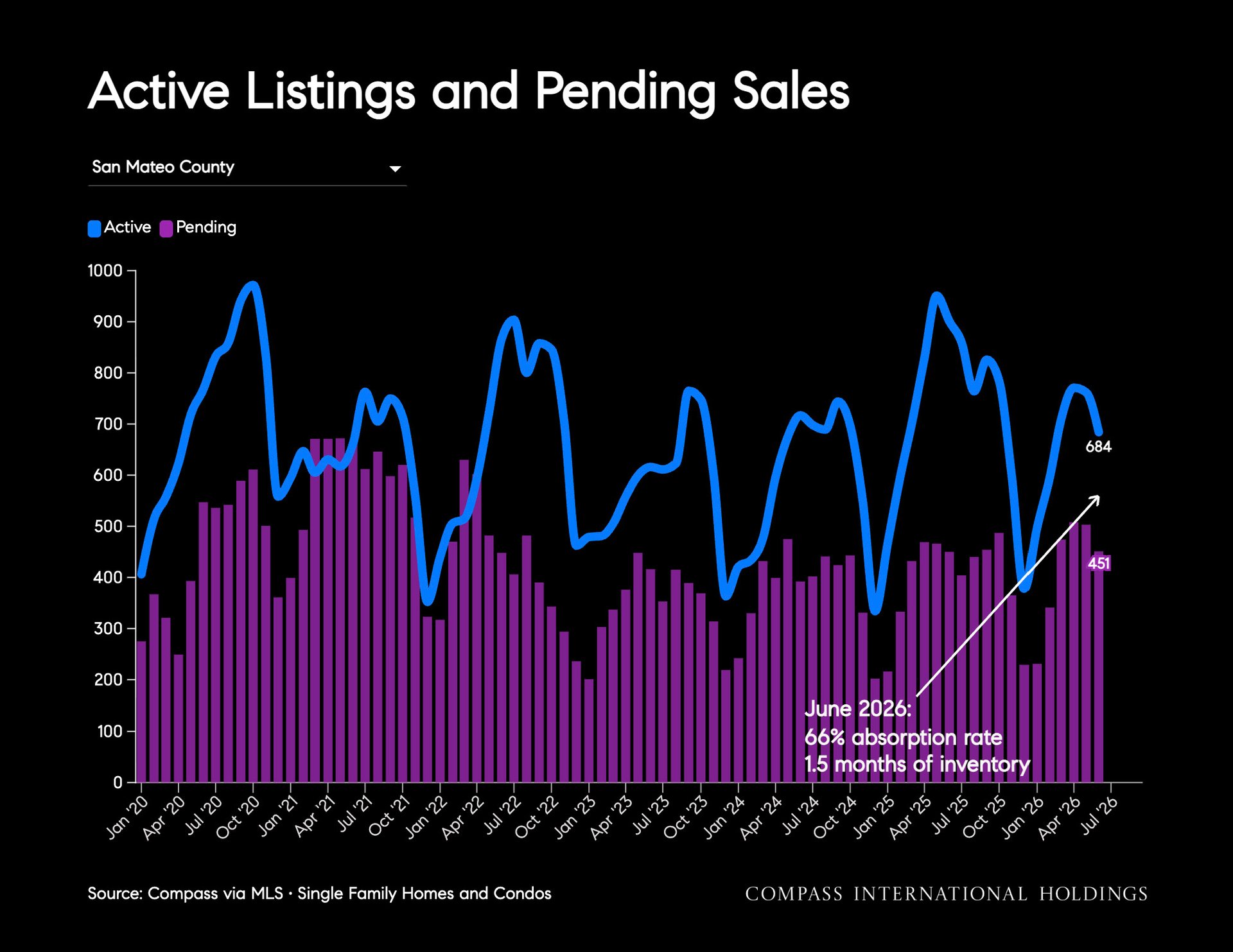
Supply remains tight. At the end of June, there were 684 active listings and 451 homes under contract across the county - an absorption rate of 66% and just 1.5 months of inventory. Sellers retain a clear advantage, though the market is less extreme than San Francisco's near-zero-inventory conditions.
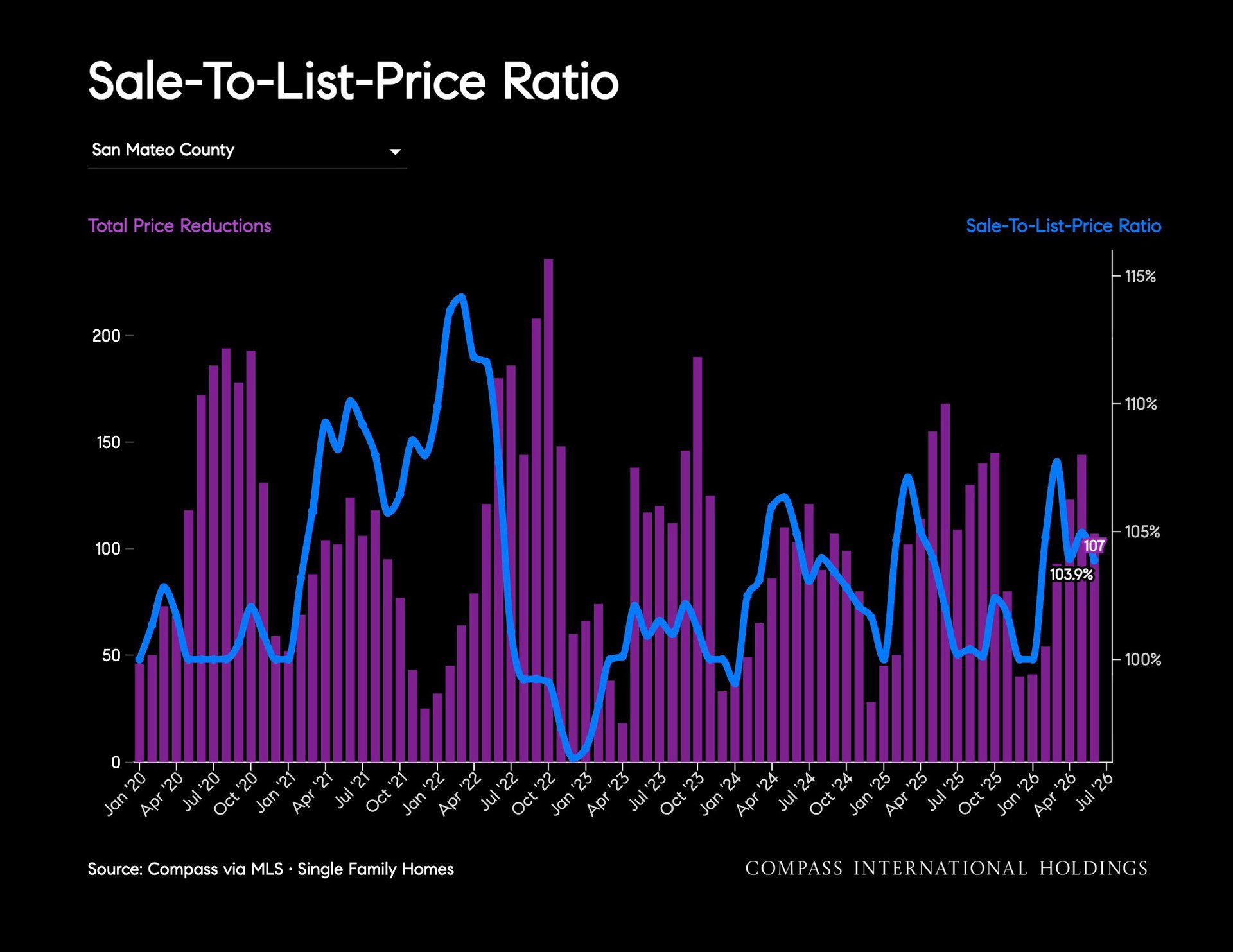
Buyers are still paying above asking, but not at the eye-watering levels San Francisco is seeing. The average sale-to-list price ratio came in at 103.9% in June - homes are closing about 3.9% above list price on average. There were 107 price reductions during the month, suggesting sellers who overshoot on pricing still face pushback. The typical home sold in 22 days, down from 27 days in June 2025.
The quality of the stock also tells a story: the typical home that sold in June measured 1,826 square feet with a median price per square foot of $1,237. Prices per square foot have continued their gradual upward climb - unlike many Bay Area markets that stalled or reversed after 2022, San Mateo County has maintained a steady upward trend.
Bottom Line
San Mateo County is delivering what a healthy real estate market looks like in 2026: prices up at a sustainable rate, sales volume accelerating, inventory tight but not catastrophic, and buyers paying modest premiums rather than 25% over asking. It does not have San Francisco's AI-wealth shock absorption, but it also does not have San Francisco's concentration risk.
The county's position - between the AI epicenter to the north and a softening tech job market to the south - has so far worked in its favor. Demand is broad rather than narrow, which makes the appreciation stickier. The risk to watch is whether the tech layoff story spreading through Santa Clara starts creeping north, or whether inflation and rates push enough fence-sitting buyers off the sidelines to keep volume growing. For now, the data points clearly in the right direction.